Boat & Stream Mastery: From Basic Formulas to Advanced Tricks
If you’ve ever rowed a boat in a river, you know the current can be your best friend or your worst enemy. That’s the whole idea behind boat and stream problems. In this guide, I’ll walk you through every concept—from the simple formulas to the advanced twists—using plain English and fresh examples. No memorizing random numbers; just understanding how the water moves.
1. The Foundation: Still Water, Stream, Downstream, Upstream
Let’s start with the basics.
- Still water speed (b): How fast the boat moves when there’s no current.
- Stream speed (s): How fast the river flows.
- Downstream (D): Boat moving with the current → speed = b + s
- Upstream (U): Boat moving against the current → speed = b – s
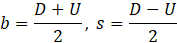
Reverse formulas (very handy):
Example 1
A boat’s speed in still water is 18 km/h. The river flows at 4 km/h.
- Downstream = 18 + 4 = 22 km/h
- Upstream = 18 – 4 = 14 km/h
If it travels 88 km downstream and returns, time =  hours.
Average Speed for a Round Trip
When a boat goes the same distance downstream and upstream, its average speed is not the average of D and U. Use:

Example 2: Boat still speed 20, stream 5 → D=25, U=15.
Average = 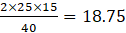 km/h.
km/h.
Ratio Tricks
If  , then:

Example 3: If boat : stream = 7 : 3, then D : U = 10 : 4 = 5 : 2.
So if downstream is 50 km/h, upstream is 20 km/h.
“Percentage More” Language
“Boat speed is 60% more than stream” means:

So if stream = 10, boat = 16.
2. Intermediate Concepts
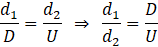
Equal Time → Speed Ratio
If time taken to cover distance  downstream equals time to cover
  upstream:
Example 4: A boat covers 45 km downstream in the same time it covers 30 km upstream. Find boat speed if stream is 6 km/h. .
.
So  →
→  →
→  km/h.
km/h.
Changing Boat or Stream Speed
- If boat speed changes by
 , both D and U change by .
 - If stream increases by
 : new D =
  , new U =
  .
. - If stream decreases by : new D =
 , new U =
  .
.
Example 5: Original b=12, s=3 → D=15, U=9.
If stream increases by 2: new D = 17, new U = 7.
The HCF / Linear Equations Method
When you get two equations like:

Let  ,
,  . Solve linear equations. Often the distances share a common factor that simplifies things.
Example 6 (changed numbers):
A man rows 30 km upstream and 44 km downstream in 10 hours. He can also row 40 km upstream and 55 km downstream in 13 hours. Find stream speed.
Let  .
.

Multiply first by 4, second by 3:

Subtract:  .
.
Then  .
.
Stream =  km/h.
km/h.
Opposite Direction Meeting
When two boats move towards each other, the stream cancels out:

Example 7: Two boats 140 km apart start towards each other. Boat A still speed 18, Boat B still 22. Stream 5.
Relative speed = 18+22 = 40 km/h.
Time to meet = 140/40 = 3.5 hours.
Crossing a Ship
If a boat crosses a ship coming from opposite direction, relative speed = boat upstream + ship downstream.
3. Advanced Concepts
Changing River Direction
Sometimes the river changes direction at different points. You must recalculate speed for each segment. Draw a diagram and label whether the boat is going with or against the new current.
Example 8: A boat goes from A to B upstream, then the river reverses, and it goes from B to C downstream. Total time = sum of times for each leg. Use new speeds.
Multiple Boats Meeting
When boats start from different points and meet, use relative speeds and distances. If one boat changes speed after some time, break the journey into phases.
Example 9: Boats X and Y start from two points 200 km apart. X goes downstream, Y goes upstream. X still = 25, Y still = 15, stream = 5.
X downstream = 30, Y upstream = 10. Relative = 40. They meet after 200/40 = 5 hours.
Percentage Changes in Weather
Rain can change stream and boat speeds. If stream increases by 25% and boat decreases by 10%:
- New stream =

- New boat =

- New D =
 , New U =
Example 10: Normal b=20, s=4 → D=24, U=16.
Rain: new b=18, new s=5 → D=23, U=13.
Variable Speeds in Different Parts
If a boat travels different distances at different speeds, calculate time for each part separately and add them.
Example 11: A boat covers 120 km at 20 km/h, then 180 km at 30 km/h. Time = 6 + 6 = 12 hours.
Two Different Rivers
If river Y flows 2 km/h faster than river X, write  . Use separate equations for each boat.
Special Relation 
If time to cover  distance upstream equals time to cover total distance downstream:

This shortcut appears in many advanced problems.
Example 12: If boat speed is twice stream speed, then D : U = 3 : 1.
4. Tips, Traps, and Exam Wisdom
- Convert all times to the same unit (hours or minutes) before calculating.
- Stream cancels when boats move in opposite directions.
- Draw a diagram for complex routes with changing directions.
- Check options — sometimes the answer is “None of these” or “Cannot be determined”.
- Use ratios to reduce variables. If
 , write
 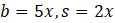 .
. - Percentage more is not the same as “percentage of”. 20% more = 1.2 times.
- Average speed for round trip uses harmonic mean, not arithmetic.
- HCF method saves time when two equations have common distance factors.
- Practice changing numbers — the concept stays the same, only the values change.
Final Thoughts
Boat and stream problems are just a mix of speed, time, distance, and relative motion. Once you understand how the current helps or hurts the boat, you can solve any variation. Start with the basic formulas, then layer on the tricks: ratios, percentage changes, multiple boats, and changing river directions. With a bit of practice, you’ll be navigating these problems like a pro.
Happy rowing! 🚣♂️
Login with