Mastering Simple & Compound Interest: Your Ultimate Guide to Cracking Banking Exams
If you are preparing for competitive exams like IBPS, SBI, or RRB, you know that Simple Interest (SI) and Compound Interest (CI) are not just about plugging numbers into formulas. It’s about understanding the underlying patterns, using ratios, and solving problems faster than the clock.
Part 1: The Foundation - Simple Interest (SI) Basics
Simple Interest is calculated only on the initial principal amount. The core formula is: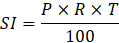
The "Base 100" Trick
Instead of dealing with complex algebra, always assume the Principal ( ) is 100%.
- If
 and
and  years, then
  of the principal.
 - Amount (
 ) =
) =  . If
. If  , then
  .
.
Finding Principal (P)
Concept: If you know SI, R, and T, find P.
New Example: A sum fetched an SI of Rs. 4,500 at 9% per annum in 5 years. Find the sum.
Solution:  .
.
Variable Rates Over Time
Concept: The rate changes after a specific period.
New Example: A sum is invested at 7% for 2 years, 9% for the next 3 years, and 11% for the next 4 years. If the total interest is Rs. 8,700, find the sum.
Solution: Total  .
. of
of  (approx).
Two Equal Sums, Different Rates
Concept: Two equal sums are invested at different rates. Find the difference in interest.
New Example: Rs. 10,000 is invested at 10% and another Rs. 10,000 at 15% for 3 years. Find the difference in interest.
Solution: Difference in Rate =  . Difference in
  .
. of
of  .
.
The "A Lends to B, B Lends to C" Profit Problem
Concept: A borrows money at a lower rate and lends it to C at a higher rate. The profit is the difference in the rates.
New Example: A lends money to B at 8%. B lends the same amount to C at 13%. If B’s profit after 4 years is Rs. 2,000, what was the sum?
Solution: Profit rate =  . Total Profit% over 4 years =
  .
. of
of  .
.
SI as a Fraction of Amount
Concept: Sometimes SI is given as a fraction of the Amount.
New Example: If the SI on a sum for 4 years is  of the Amount. Find the rate.
Solution: Let  ,
,  , so
, so  .
. .
.
Part 2: Advanced Simple Interest (Distribution & Allegation)
Dividing a Sum into Two Different Rates (Allegation)
Concept: A total sum is divided into two parts, invested at different rates.
New Example: A sum of Rs. 30,000 is divided into two parts, invested at 8% and 14% for 2 years. If the total interest is Rs. 6,600, find the amount invested at 14%.
Solution: Overall Rate =  .
.
Using Allegation:  and
and  giving an average of
  .
.
Ratio of amounts =  .
.
Amount at 14% =  .
.
Distributing Money (Equal SI)
Concept: A sum is divided among A, B, and C at different rates and times, but the SI earned by each is equal.
New Example: Rs. 15,000 is divided among A, B, C at 10% for 2, 3, and 6 years respectively. If the SI is equal, find A's share.
Solution:  .
.
Total parts = 6. A's share =  .
.
Distributing Money (Equal Amount)
Concept: The final Amount () is equal, not the SI.
New Example: Rs. 20,000 is divided among A, B, and C at 5% for 2 years, 10% for 3 years, and 15% for 4 years. If the Amounts are equal, find A's share.
Solution: Amount Factors:  .
.
Ratio of Principal =  . (Multiply by 100 to simplify).
The key is to use the inverse of the Amount Factor ( ) to find the ratio of the principal amounts.
Part 3: Compound Interest (CI) Basics
CI is "interest on interest." The formula is  .
.
The Ratio Method (The Game Changer)
Instead of using the formula, convert the rate to a fraction. If 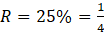 , then:
Year 1: 
Year 2: 
Year 3: 
The CI is the difference between the parts. For Year 3, CI =  parts.
New Example: Find CI on Rs. 64,000 at 25% for 3 years.
Solution: 64 parts = 64,000  1 part = 1,000.
CI = 61 parts =  .
.
Variable Rates in CI
Concept: Different rates for different years.
New Example: Rs. 8,000 is invested at 10%, 20%, and 25% for 3 consecutive years.
Solution: Convert to fractions: 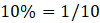 ,
,  ,
,  .
.
Amount =  .
.
CI =  .
.
Half-Yearly & Quarterly Compounding
Concept: Interest is calculated multiple times a year.
Rule: Divide the Rate by the frequency, and multiply the Time by the frequency.
New Example: Find CI on Rs. 10,000 at 20% p.a. for 1.5 years, compounded half-yearly.
Solution: Half-yearly Rate = 10% = 1/10. Time = 3 intervals.
Ratio =  .
.
CI = 331 parts. 1000 parts = 10,000 1 part = 10.
CI =  .
.
Part 4: Advanced Compound Interest
Difference Between Consecutive Years' CI
Concept: Find the difference between the CI of the 2nd year and the 3rd year.
Shortcut:  .
.
New Example: The difference between the CI of the 2nd year and 3rd year is Rs. 1,200. Rate is 20%. Find the Principal.
Solution:  . Ratios:
  .
.
Interests: Year 1 = 25, Year 2 = 30, Year 3 = 36.
Difference =  parts = 1,200 1 part = 200.
Year 1 Interest = 25 parts =  .
. .
.
The "Times & Time" Rule
Concept: A sum becomes 'x' times in 't' years. In how many years will it become 'y' times?
Formula:  . Time =
  .
.
New Example: A sum becomes 5 times in 10 years. In how many years will it become 125 times?
Solution:  . Time =
  years.
The Multiplier Method
Concept: Used when the amount at different fixed intervals is given.
New Example: Rs. 5,000 becomes Rs. 6,500 in 3 years. What will it become in 9 years?
Solution: Multiplier for 3 years =  .
.
For 9 years (3 intervals): Amount =  .
.
Part 5: Mixed Problems (SI vs. CI)
The difference between SI and CI is a favorite topic for examiners.
Difference for 2 Years
Formula: 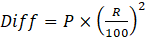
New Example: The SI on a sum for 2 years is Rs. 5,000 and the CI is Rs. 5,200. Find the sum.
Solution: Ratio  .
.
So,  .
. .
.
Difference for 3 Years
Formula: 
New Example: The difference between CI and SI for 3 years at 20% is Rs. 2,640. Find the sum.
Solution:  .
.
Ratio of Differences
Concept: Given the ratio of  for 3 years and 2 years.
Formula: 
New Example: The ratio of the difference of CI and SI for 3 years and 2 years is 32:10. Find the rate.
Solution:  .
.
Part 6: Installments (SI & CI)
Simple Interest (SI) Installments
Concept: A debt is paid in equal annual installments. Let each installment = 100x.
New Example: A debt of Rs. 13,200 is to be paid in 3 equal annual installments at 10% SI. Find the installment.
Solution: Let Installment = 100x.
Year 1: Paid at end of Year 1. Interest for 2 years =  . Amount = 120x.
Year 2: Paid at end of Year 2. Interest for 1 year = 10%. Amount = 110x.
Year 3: Paid at end of Year 3. No interest. Amount = 100x.
Total =  .
. .
.
Installment =  .
.
Compound Interest (CI) Installments - Backward Ratio Method
Concept: Calculate the present value of each installment backwards.
New Example: A loan of Rs. 21,000 is to be paid in 2 equal annual installments at 10% CI. Find the installment.
Solution: Let Installment =  . Rate = 10% = 1/10. Ratio of
  . So,
. So,  .
.
End of Year 1 Balance (Present Value of Year 2 Inst) =  .
.
Initial Loan (Present Value of Year 1 Inst + PV of Year 2 Inst) = 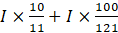 .
. .
. .
.
Finding Total Interest in CI Installments
Concept: Total Interest = (Total Amount Paid) - (Loan Amount).
New Example: A loan is repaid in 2 equal installments of Rs. 24,200 at 10% CI. Find the total interest.
Solution: Using the above method, Loan =  .
.
Total Paid =  .
.
Total Interest =  .
.
Finding Cash Price in CI Installments
Concept: Cash Price = Down Payment + Loan Amount.
New Example: A scooter is bought with a down payment of Rs. 30,000 and 2 equal annual installments of Rs. 12,100 at 10% CI. Find the cash price.
Solution: Loan =  .
.
Cash Price =  .
.
Final Thoughts
The key to mastering these concepts is to stop relying solely on formulas and start using the Ratio and Base 100 methods. Whether it's calculating the difference between SI and CI or finding the present value of an installment, converting percentages to fractions and drawing a timeline will save you precious minutes in the exam hall.
Practice these concepts with fresh numbers, and you'll be ready to tackle any SI or CI question that comes your way! Happy calculating!
Login with