
Time, Speed & Distance: The Complete Concept Blog
Hey there! If you’re preparing for banking, SSC, or any competitive exam, Time, Speed & Distance (TSD) is one of those topics that keeps coming back—sometimes directly, sometimes mixed with trains, boats, circular tracks, or races. The good news is that once you understand the core ideas, most questions become just a few steps of logical math. In this blog, I’ll walk you through every important concept from basic to advanced, including circular tracks and races.
Let’s dive in.
1. The Three Pillars: Speed, Distance, Time
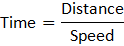
Everything in TSD revolves around one simple formula:

From this, we get:

Example:
A car covers 150 km in 3 hours.
Speed = 150 / 3 = 50 km/h.
Unit conversion:
- 1 km/h = 5/18 m/s
- 1 m/s = 18/5 km/h
So, 90 km/h = 90 × 5/18 = 25 m/s.
And 20 m/s = 20 × 18/5 = 72 km/h.
2. Ratio & Proportionality Rules
These rules save you from long calculations.
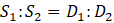
When Time is Constant
Speed and Distance are directly proportional.
Example:
Two friends run for the same time. Speeds are 4 km/h and 5 km/h.
Distance ratio = 4 : 5.
When Distance is Constant
Speed and Time are inversely proportional.

Example:
A covers 60 km at 30 km/h, B covers 60 km at 20 km/h.
Speed ratio = 30 : 20 = 3 : 2.
Time ratio = 2 : 3.
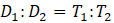
When Speed is Constant
Distance and Time are directly proportional.
3. Average Speed
Average speed is not the average of speeds. It is:

Special Case: Equal Distances
If a person travels the same distance at speeds  and
and  , then:

Example:
Up hill at 30 km/h, down hill at 20 km/h.
Average =  km/h.
km/h.
Different Distances
Just add distances and times.
Example:
120 km at 40 km/h → 3 hr
180 km at 60 km/h → 3 hr
Total distance = 300 km, total time = 6 hr.
Average = 300 / 6 = 50 km/h.
4. Relative Speed
When two objects move:
- Opposite direction: Relative Speed =

- Same direction: Relative Speed =

Time to meet = Initial distance / Relative speed.
Example 1 (Opposite):
Two trains 300 km apart, speeds 60 km/h and 40 km/h.
Relative speed = 100 km/h.
Time = 300 / 100 = 3 hours.
Example 2 (Same direction):
A thief runs at 50 km/h, police at 70 km/h. Gap = 60 km.
Relative speed = 20 km/h.
Time = 60 / 20 = 3 hours.
5. Early, Late & Scheduled Time
If a person travels at two different speeds and reaches early or late, use:

- If one case is early and the other is late, add the times.
- If both are early or both are late, subtract the times.
Example:
At 60 km/h, A reaches 20 min early.
At 45 km/h, A reaches 10 min late.
Time difference = 20 + 10 = 30 min = 0.5 hr.

So the distance is 90 km.
6. Meeting Point Problems
When two people start from opposite ends and meet, time is the same for both.
So, Distance ratio = Speed ratio.
Example:
A and B start from X and Y towards each other.
Speeds: A = 7 km/h, B = 3 km/h. Total distance = 200 km.
Distance ratio = 7 : 3.
A covers 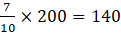 km.
km.
B covers 60 km.
Same Direction & Head Start
Convert head start into distance gap.
Then use relative speed = difference.
7. After-Meeting Formula
If two people meet and then continue to their destinations, and after meeting they take  and
and  hours respectively:

Example:
After crossing, A takes 16 hours to reach B’s start, B takes 9 hours to reach A’s start.
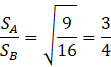
So, speed ratio A : B = 3 : 4.
8. Segmented & Variable Speed Journeys
When a journey is split into parts with different speeds:

Example:
A bus covers 120 km at 60 km/h and next 120 km at 40 km/h.
Time = 2 + 3 = 5 hours.
Average speed = 240 / 5 = 48 km/h.
If speed changes after an accident, the delay is caused only by the remaining distance.
Set up equations using the reduced speed.
9. Circular Track Concepts
On a circular track of circumference  :
:
Same Direction
- First meeting time =

- Meeting at starting point: time = LCM of their individual lap times.
Example:
Track = 600 m. Speeds = 10 m/s and 15 m/s (same direction).
Relative speed = 5 m/s.
First meet = 600 / 5 = 120 seconds.
Lap times: 60 s and 40 s.
LCM = 120 s → they meet at starting point after 120 seconds.
Opposite Direction
- First meeting time =

Example:
Same track, speeds 10 and 15 opposite.
Relative speed = 25 m/s.
Time = 600 / 25 = 24 seconds.
Multiple Meetings
- Opposite direction: nth meeting total distance =

- Same direction (from same point): nth meeting total distance =

10. Race Concepts
Beating by Distance
If A beats B by  meters in a race of
  meters, then when A finishes , B covers
  .
.
Speed ratio:

Example:
In 800 m race, A beats B by 80 m.
A : B = 800 : 720 = 10 : 9.
Beating by Time
If A beats B by  seconds, then B takes seconds more to finish after A finishes.
Use  .
.
Example:
In 1000 m race, A beats B by 100 m or 25 seconds.
B’s speed = 100 / 25 = 4 m/s.
B’s time = 1000 / 4 = 250 s.
A’s time = 250 – 25 = 225 s.
Start / Lead
If A gives B a start of  meters in race of :

Combined Race Ratios
If A beats B and B beats C, multiply ratios to find A : C.
Example:
In 600 m, A beats B by 60 m → A:B = 600:540 = 10:9.
In 500 m, B beats C by 50 m → B:C = 500:450 = 10:9.
Then A:C = (10/9) × (10/9) = 100:81.
In 400 m race, A beats C by 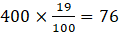 m.
m.
11. Advanced & Mains Patterns
Partial Journey with Two Modes
Let  be variables. Form equations from total time.
Example:
Total 500 km.
Case 1: 200 km by bus + 300 km by car = 8 hr.
Case 2: 300 km by bus + 200 km by car = 9 hr.
Solve to get bus and car speeds.
Complex Multi-Day Problems
Break the information into equations.
Use consistent variables for speeds and distances.
After-Meeting with Multiple People
Use the same after-meeting formula, but apply it pairwise.
Circular Track Races
If a race is to end on the nth meeting, total distance =  relative speed × time.
12. Quick Formula Cheat Sheet
|
Concept |
Formula |
||
|
Basic |
|
||
|
Average Speed |
|
||
|
Equal Distance Avg |
|
||
|
Opposite Relative Speed |
|
||
|
Same Direction Relative Speed |
( |
S_1 - S_2 |
) |
|
Early/Late Distance |
(D = \frac{S_1 S_2}{ |
S_1 - S_2 |
} \times T.D.) |
|
After Meeting |
|
||
|
Circular Same Direction |
|
||
|
Circular Opposite |
|
||
|
Race Beating by Distance |
|
||
|
Race Beating by Time |
|




13. Final Thoughts
Time, Speed & Distance is not about memorizing dozens of formulas. It’s about understanding a few core relationships:
- Distance = Speed × Time
- Ratios change depending on what is constant
- Relative speed is the key to meeting problems
- Circular tracks and races are just applications of these basics
Practice with different numbers, and soon you’ll see the pattern behind every question. Happy learning!
Login with