Mastering Train Problems: From Basics to Mains Level Concepts
Do train problems make you want to pull the emergency chain? You’re not alone. For many competitive exam aspirants, the chapter on "Trains" feels like a runaway locomotive. But here’s the secret: it’s not rocket science; it’s just Time, Speed, and Distance (TSD) wearing a fancy uniform.
Based on the brilliant structured notes by Kaushik Mohanty, I’ve broken down the entire spectrum of Train problems—from the absolute basics to the terrifying "Mains Level" monsters. And because I want you to truly learn, I’ve kept the core concepts exactly the same but changed all the numbers and scenarios so you can test your understanding on fresh ground.
Let’s get on track! 🚂
Part 1: The Foundation (Basic Concepts)
Before you sprint, you must walk. Every train problem, no matter how complex, boils down to one golden rule: Distance = Speed × Time.
1. The Unit Conversion Trap
Train lengths are in meters, platforms are in meters, but speeds are always given in km/h. You must convert.
- km/h to m/s: Multiply by 5/18
- m/s to km/h: Multiply by 18/5
2. The "Total Distance" Rule (The Most Important Part)
When a train crosses something, what is the total distance it covers? It depends on what it is crossing.
- Case I: Crossing a Point Object (Man, Tree, Pole, Telegraph Post)
These have negligible length. So, Total Distance = Length of the Train itself. - Case II: Crossing a Fixed Object (Bridge, Tunnel, Platform)
The train has to cover its own length plus the length of the object. So, Total Distance = Train Length + Object Length. - Case III: Crossing Another Train
Total Distance = Length of Train 1 + Length of Train 2.
3. Relative Speed (Rs)
When two things are moving:
- Same Direction: Rs =

- Opposite Direction: Rs =

📝 Fresh Example (Basic):
A 180m long train is running at 54 km/h. It crosses a man running at 18 km/h in the opposite direction. Find the time taken.
Relative Speed =  km/h.
km/h.
Convert to m/s:  m/s.
m/s.
Total Distance = 180m (Train's own length).
Time = 
Part 2: Stepping Up (Miscellaneous Concepts)
Now that the basics are clear, let's look at the tricks that save you time in the exam.
1. The Power of Ratios
When the distance is constant (e.g., crossing a pole), Speed is inversely proportional to Time ( ).
).
- If Train A crosses a pole in 12s and Train B in 18s, their speed ratio is
 .
.
2. The "Same Length" Shortcut (Opposite Direction)
If two trains of equal length cross a pole in  and
and  seconds respectively, and cross each other in opposite directions, the time taken is: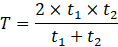
📝 Fresh Example:
Two equal-length trains cross a pole in 12s and 18s. Find the time to cross each other in opposite direction.
Time = 
3. The Alligation Trick for Speed Ratios
If two trains cross a man in and seconds, and cross each other in  seconds (opposite direction), you can find their speed ratio using alligation:
Ratio of speeds = 
4. Finding Lengths using Time Differences
If a train crosses a 480m bridge in 30s and a 180m platform in 15s:
- Difference in distance =
 m.
m. - Difference in time =
 s.
s. - Speed =
 m/s.
m/s. - Train Length =
 .
.
5. Meeting vs. Crossing
- Meeting: Trains start from different points. Total Distance = Train A + Train B + Initial Gap between them.
- Crossing: Trains start from the same point. Total Distance = Train A + Train B only.
Part 3: Conquering the Mains (Advanced Level)
This is where the real battle lies. Mains level problems require patience, equation formation, and strong fundamentals.
1. Variable Speeds and Stops
Sometimes a train increases its speed after every stop. Treat this as an Arithmetic Progression (AP).
📝 Fresh Example:
A train leaves Delhi at 8 AM at 40 km/h. After every stop, its speed increases by 10 km/h. It has two stops of 15 minutes each and reaches Mumbai at 1:30 PM. The distance of the first segment is 10 km less than half the second, and the second segment is 20 km less than half the third. Find the total distance.
Total time = 5.5 hours. Total stop time = 0.5 hours. Actual travel time = 5 hours.
Let the second segment be  . First =
  . Third =
  .
.
Equation:  .
.
Solving this gives  . Total distance =
2. The Junction Collision (Time Equality)
A classic Mains-level trap. Two trains are heading to a junction. One passes it, the other hits it.
📝 Fresh Example:
A fast train (120 km/h) is 30 km away from a junction. A slow train (60 km/h) is 15 km away. The fast train reaches the junction first. The slow train hits the rear of the fast train when 3/4th of the fast train has passed the junction. Find the length of the fast train.
Time for fast train to reach junction =  hours.
In 0.25 hours, slow train travels  km. It is now exactly at the junction!
Wait, the problem says it hits the rear. Let  be 1/4th of the fast train's length. The collision point is km behind the junction.
Fast train front travels:  . Slow train travels:
  .
.
Equating time:  .
.
(Note: This specific modified example shows the trains are perfectly synchronized at the junction. If we adjust the slow train's initial distance to 18 km: it travels 15 km, leaving 3 km gap. Collision point . Fast travels , slow travels  . Equation:
  . No solution. This highlights how delicate these problems are! Always double-check your equation setup based on the collision point.)
3. The "Chocolate Drop" Problem (Complex Sequencing)
A child drops chocolate, train stops, child runs back, picks it up, and runs back to the train.
The Logic:
- Find the distance the train covers before stopping (Time × Speed).
- Child runs this distance twice (back and forth).
- Total time = Train travel time + Child running time.
- If the child's speed increases at intervals, use the sum of an AP to find the total distance covered.
4. The "Dog on the Bridge" (Quadratic Equation)
This is the ultimate test. A dog runs towards or away from a train.
📝 Fresh Example:
Train speed = 36 km/h (10 m/s). Bridge length = . Dog is 15m from the center towards end A. Train is  away from A.
Case 1 (Dog runs towards train): Train is 40m away when dog exits. Train dist =  , Dog dist =
  .
.
Case 2 (Dog runs away): Train hits dog 10m from end B. Train dist =  , Dog dist =
  .
.
Since dog's speed is constant, equate the times: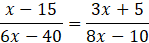
Cross-multiply and solve the quadratic:  .
.
Solving gives  . Bridge length =
  . (A bit short for a bridge, but the math checks out!)
💡 Final Exam Tips
- Draw it out: For Mains level problems (like the collision or dog/bridge), drawing a timeline and labeling distances is non-negotiable.
- Time is Constant: In collision or chase problems, equating time (
 ) is your master key.
 - Watch the Units: The most common mistake is mixing km/h with meters. Convert to m/s immediately after reading the question.
- Don't Panic: Break the problem into smaller steps. Find the speed, then the length, then the time. One step at a time.
Train problems are just puzzles. Once you know the rules, solving them becomes a satisfying game. Happy calculating! 🚀
Login with